Well, this will be a short post as I just returned from my trip to Alaska. I wanted to give a quick update on my use of the RRS TVC-34L tripod in the field and the things I liked and did not like (which are very few). First, my choice of the 34L for packing reasons was a savior. I had just enough space for the 34L that would have put me in a tight spot with the Gitzo. I hit the 50lb mark exactly going there and coming back with the RRS in the bag. I would have been about 2lbs over with the Gitzo should I have decided to take that instead (would have been an extra $100 in overage weight fees). I also decided to wrap the top legs in bicycle bar tape rather than a lenscoat or foam leg wraps, worked perfectly.
For the trip to Katmai I went with the minimal amount of gear I could (D3s, 600 VR, D300s, 24-70 and 70-200) along with the RRS TVC-34L tripod. The first thing I found out before I left for Alaska is that I did not extend the first leg (I know, first rule of keeping debris out of the leg locks). Reason is that I found too much flex in the tripod with the first leg extended. I feel that the thinness of the diameter of the first leg allowed too much movement and that I only extended the top three legs and left the first one retracted. It worked fine for me. Slight bending over, but nothing I could not handle. I did not more walking over the 5 hours I was there so the times I took shots, it was not for an extended period of time (which is too bad as I could have easily spent 10 hours there). I will work more on having the first leg extended and see if it really is an issue or not.
I walked with the 34L and the 3 legs extended with the wimberley, d3s and 600 VR over my shoulder the entire time. The compactness of the top plate and distance between the legs suited my left shoulder perfectly. I had never walked any length of time with a setup like this on my shoulder, but I perfected it in the time I was there. The 34L performed flawlessly while there and during the rest of my trip. The leg locks also were second nature and never thought about them, which is a great thing. raising or lowering the legs were simple and quicker than the Gitzo, but that is my personal opinion. Since I was walking so much, I did not have a chance to hang a bag off the hook and my gripe over the caribiner hook change was a non-issue. I actually received an email from Joe Johnson (President) from RRS alerting me to the change after reading my blog, assuring me that no caribiner would slip off with the new design. I tried it after the Katmai trip and sure enough, a non-issue. Thanks for the email Joe!
I can not be more happy with the 34L and glad I was able to get one for my trip, actually saved me some money having it! Not sure many people could say that about a tripod. The 34L took everything I threw at it in the wet fields and waters at Katmai and the Kenai Peninsula of Alaska. I will have this tripod for some time and will be selling my Gitzo shortly. :)
Tuesday, July 19, 2011

Wednesday, July 6, 2011
Really Right Stuff TVC-34L Review & Comparison To Gitzo GT5541LS
Well, I did not have enough time to write this up before I left for a quick 4th of July vacation up in the Northwoods of Wisconsin. Now that I have a bit of time before my trip to Alaska, I thought I would do a write up of the Really Right Stuff TVC-34L and a comparison of it to my previously main tripod, the Gitzo GT5541LS. I was so excited to finally receive the 34L as I placed my order well over a month prior to receiving it. It was double boxed and in perfect condition when I received it.

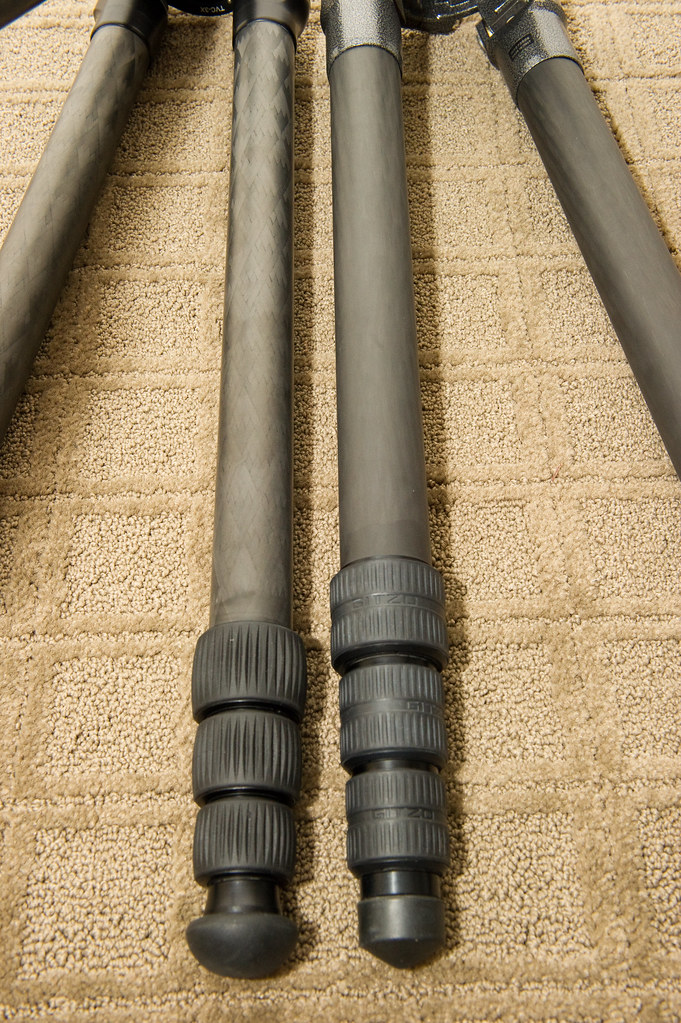
First thought after getting it in my hands is how light it is and the finish on the carbon fiber legs. It is something of a smooth matte clear lacquer on each leg. Feels really slick and smooth, I like it. Second thing that I noticed was the diameter of the first leg. It was quite a bit smaller in diameter than the Gitzo. It actually felt more like a 3 series from Gitzo than a 5 series. I actually kind of prefer the thickness of the 5 series Gitzo over the RRS.

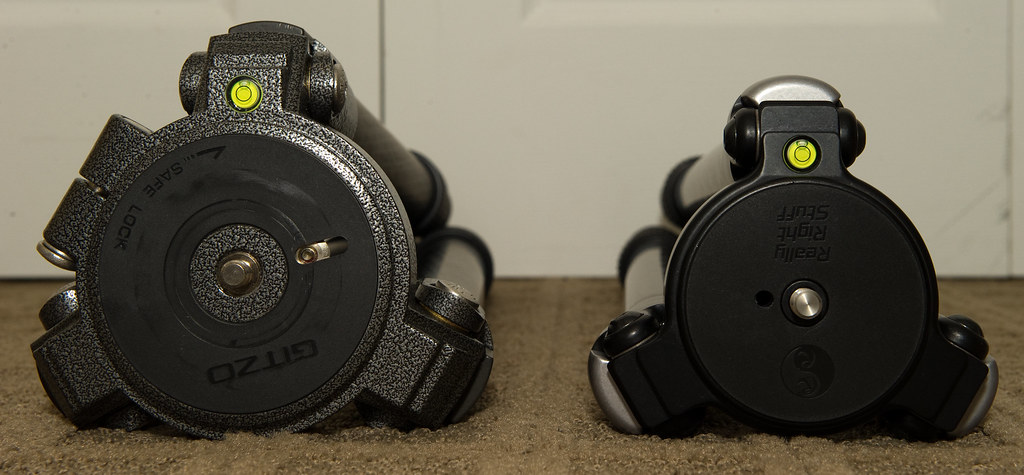
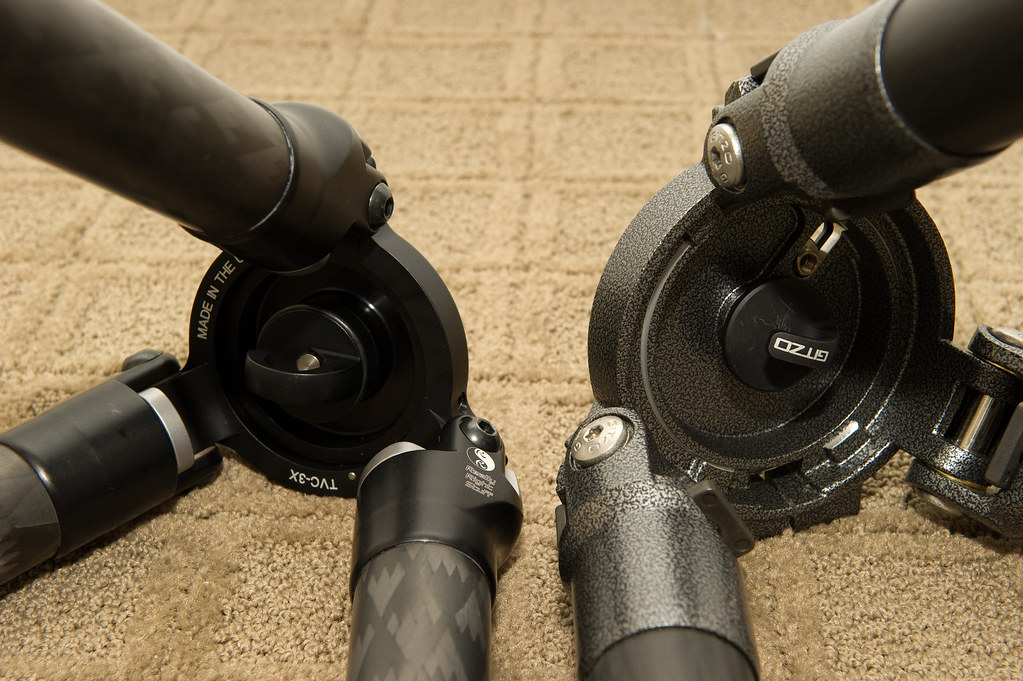
One of the next things I noticed and was very happy to see was the diameter of the top plate (apex). The TVC-34L has a super small plate vs. the very large diameter plate for the GT5541LS. This means 2 things to me: less weight and smaller packing dimensions. This plate diameter is one of the first things that drew me to the RRS tripod. The second was the overall weight. At almost 2lbs less (6.3lbs vs. 4.7lbs) that adds up when packing a lot of gear, especially if you are close to the 50lb limit on checked luggage. I plan on packing the tripod in a checked bag and the less room it took up, the more room I had for other things, like clothes. Another great feature is the locking ring on the top apex plate. Gitzo's have been known or prone to having the top plate come loose and lose whatever it is you have mounted to the top. Having $15k worth of gear fall off because of bad design is a no-no in my book. Knowing that I do not have to spend another $100 for a locking plate to secure on the gitzo and the piece of mind knowing that I will not lose the gear I have attached made the RRS tripod that much more appealing.


The next great feature of the RRS tripod is the ratcheting and smaller leg connections. It takes the same amount of effort to change the leg angle as the Gitzo, but reverting back to full height is so much quicker and easier as the leg ratchets itself back to the original position without having to close the stop. A great feature to me that I know I will appreciate when using.

Now the length of the closed tripod is another factor I look for when traveling. The RRS TVC-34L is actually slightly longer than the GT5541LS, about 3/4 of an inch. The TVC-34L comes in at slightly over 24" and the GT5541LS comes in slightly over 23". I do not believe that this will be a hindrance in anyway to me in any way. If it come down to it, I can screw off the rubber feet and have it smaller in a snap.

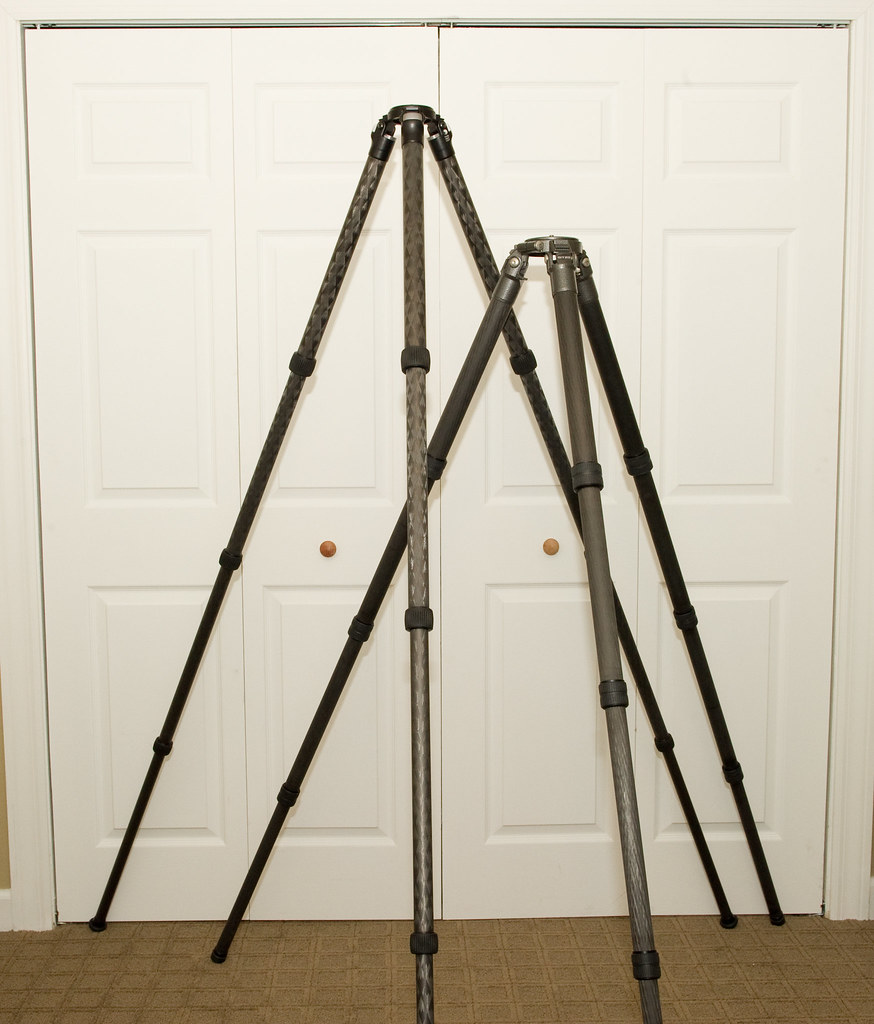
Having the RRS tripod being almost the same length closed as the Gitzo but be almost a foot taller was a definite plus in the RRS column. The TVC-34L goes to 70" (5'-10) where as the Gitzo only goes to 60" (5'-0"). That extra 10" can come in handy on uneven terrain to get the tripod level or up to shooting height so you are not bending over so much. I use a wimberly version II head and even with the height adjustability of the Wimberley, I have come into many situations where I had to bend over to make shots. When you are out taking pictures of birds for a good length of time, your back gets tired. When you get tired physically, you are not thinking about the shot or what you want, you are thinking about your back and wishing you could stand up, missing shots.


Some of the features that I was looking forward to that are not evident until you start using it was the bag hook below the apex base and the no-twist leg locks. I am not sure if Really Right Stuff changed their design, but I thought that there was a different hook below that had a hole that allowed a caribiner to be placed in with no chance of it slipping off. On top of not having the hole, it also does not swivel like the one shown in the RRS TVC-33 video you can see on You Tube. I am a bit dissapointed by this and thought this would be a great and well-used feature by me.

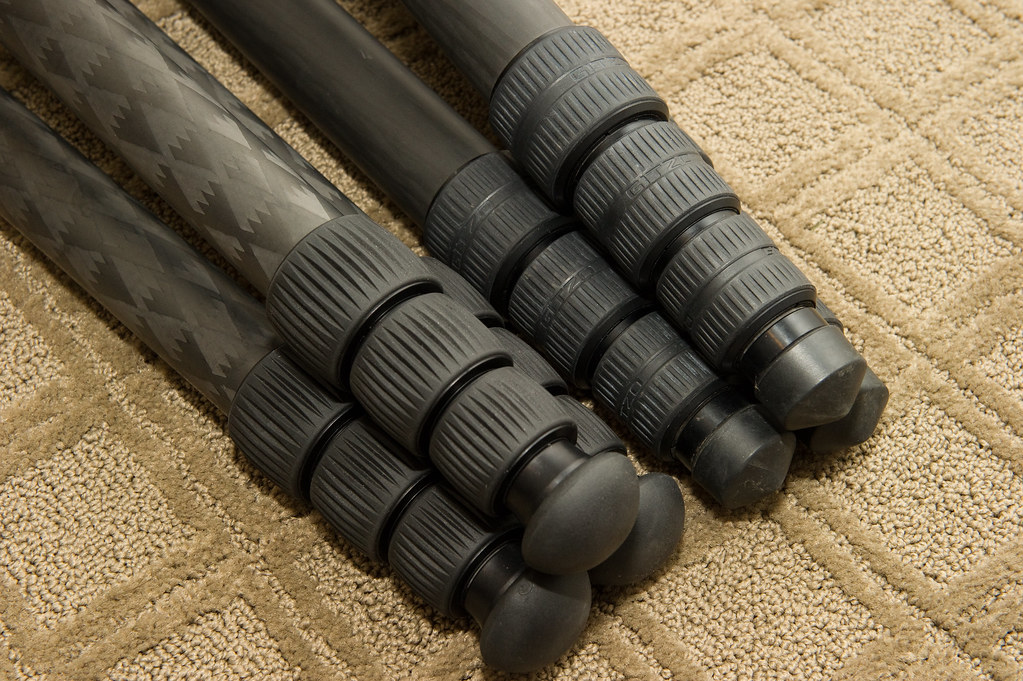
The no-spin leg locks (like Gitzo's G-Lock) are made so that you can loosen a leg section and not have the leg twist while doing so. Having had older Gitzo and non-Gitzo tripods in the past, this is a welcomed feature and should be standard on any tripod. First impression of the locks is that they are a good size to fit in my hand and having the curved cylinder rather than a straight cylinder shape like the Gitzo, made it easier to lock and un-lock. One gripe is that 2 of the locks on the first leg section were a bit 'crunchy' in that they threading of the 2 pieces was not very smooth or something was obstructing the thread. Since this was never used, I would have hoped that would have been tested before being boxed and shipped. I might have to remove the lock to inspect the threads to make sure there is nothing blocking them. The curved rubber feet should prove to keep a lot of stuff off of the first leg section when going really low and give a better angle of friction as well.

Overall, I think that the RRS is a great tripod and certainly trumps the Gitzo in many categories. I think the overall height, size and weight are clearly a win over the Gitzo. I am not sure if the beefiness of the Gitzo legs are a help or a hindrance as the RRS legs are much smaller in diameter. I could actually get a good amount of flex in the RRS tripod when jostling a leg vs. the Gitzo. I will have to test in wind to see if it makes a difference in the vibration dampening of the carbon fiber legs. The overall fit and finish is also a win over the Gitzo. Machined parts always hold a special place in my heart having worded for a few machinists when I was younger. The leg locks I think are a toss-up as they both work great, but having some glitches in mine was a definite minus. The under side hook was a let down not being the same as the previous tvc-33. Gitzo's well, not the best choice of materials used for it.
I plan to do a bit more testing before my trip to Alaska to make sure that the RRS has a place in my bag, my guess is that it will, but if it can not be as solid as the Gitzo (a clear benchmark in solid tripods) then it is just a pretty paper-weight in my opinion. Blurry pictures are worthless. Stay tuned....

First thought after getting it in my hands is how light it is and the finish on the carbon fiber legs. It is something of a smooth matte clear lacquer on each leg. Feels really slick and smooth, I like it. Second thing that I noticed was the diameter of the first leg. It was quite a bit smaller in diameter than the Gitzo. It actually felt more like a 3 series from Gitzo than a 5 series. I actually kind of prefer the thickness of the 5 series Gitzo over the RRS.
One of the next things I noticed and was very happy to see was the diameter of the top plate (apex). The TVC-34L has a super small plate vs. the very large diameter plate for the GT5541LS. This means 2 things to me: less weight and smaller packing dimensions. This plate diameter is one of the first things that drew me to the RRS tripod. The second was the overall weight. At almost 2lbs less (6.3lbs vs. 4.7lbs) that adds up when packing a lot of gear, especially if you are close to the 50lb limit on checked luggage. I plan on packing the tripod in a checked bag and the less room it took up, the more room I had for other things, like clothes. Another great feature is the locking ring on the top apex plate. Gitzo's have been known or prone to having the top plate come loose and lose whatever it is you have mounted to the top. Having $15k worth of gear fall off because of bad design is a no-no in my book. Knowing that I do not have to spend another $100 for a locking plate to secure on the gitzo and the piece of mind knowing that I will not lose the gear I have attached made the RRS tripod that much more appealing.
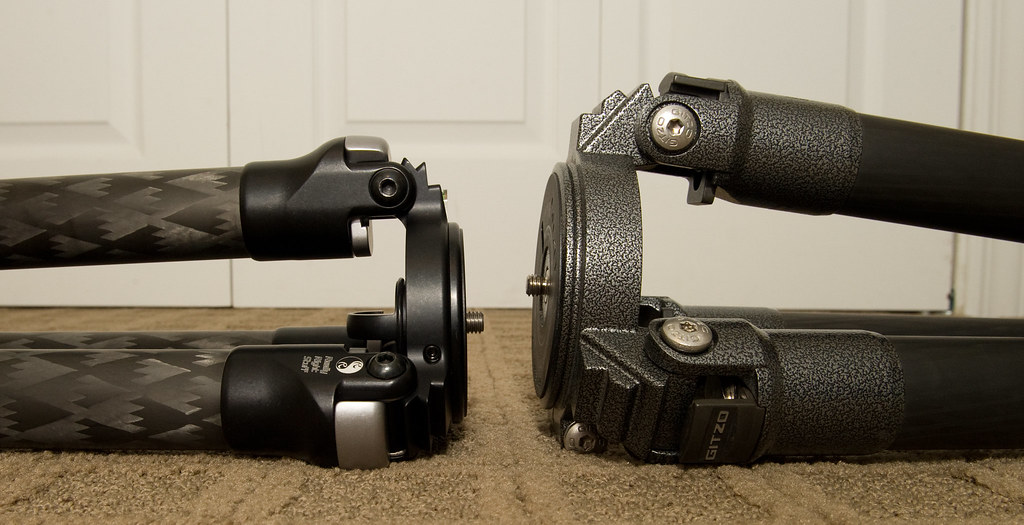
The next great feature of the RRS tripod is the ratcheting and smaller leg connections. It takes the same amount of effort to change the leg angle as the Gitzo, but reverting back to full height is so much quicker and easier as the leg ratchets itself back to the original position without having to close the stop. A great feature to me that I know I will appreciate when using.
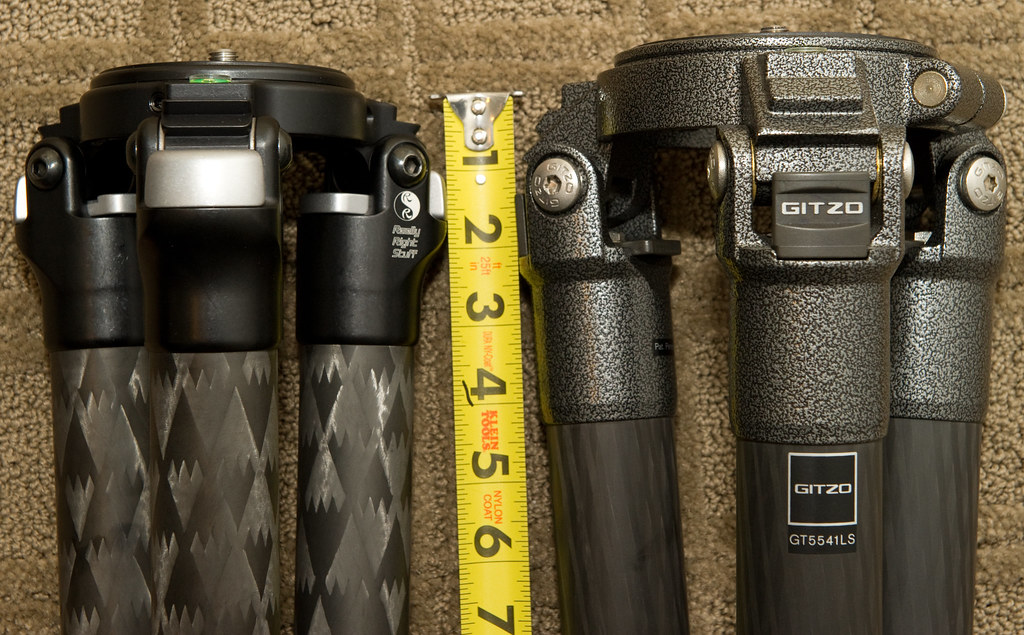
Now the length of the closed tripod is another factor I look for when traveling. The RRS TVC-34L is actually slightly longer than the GT5541LS, about 3/4 of an inch. The TVC-34L comes in at slightly over 24" and the GT5541LS comes in slightly over 23". I do not believe that this will be a hindrance in anyway to me in any way. If it come down to it, I can screw off the rubber feet and have it smaller in a snap.
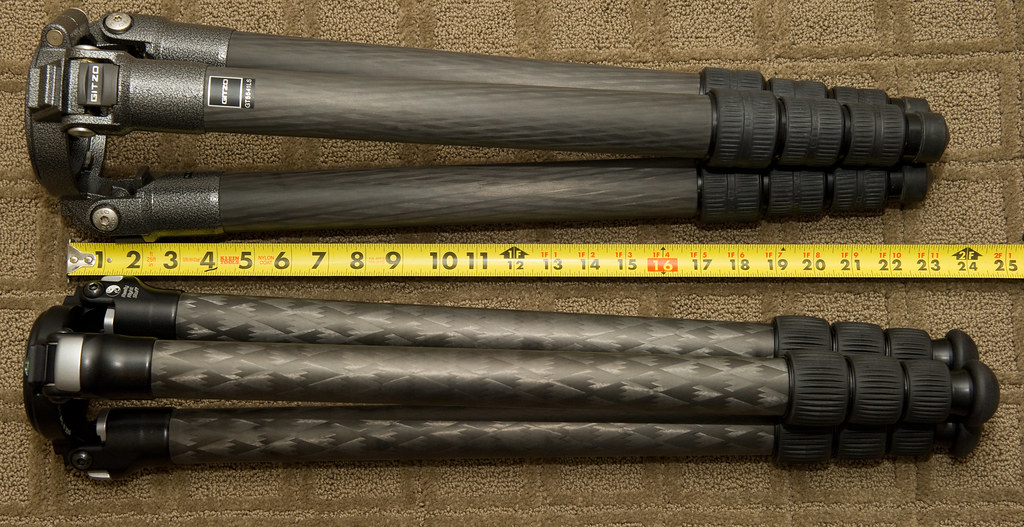
Having the RRS tripod being almost the same length closed as the Gitzo but be almost a foot taller was a definite plus in the RRS column. The TVC-34L goes to 70" (5'-10) where as the Gitzo only goes to 60" (5'-0"). That extra 10" can come in handy on uneven terrain to get the tripod level or up to shooting height so you are not bending over so much. I use a wimberly version II head and even with the height adjustability of the Wimberley, I have come into many situations where I had to bend over to make shots. When you are out taking pictures of birds for a good length of time, your back gets tired. When you get tired physically, you are not thinking about the shot or what you want, you are thinking about your back and wishing you could stand up, missing shots.

Some of the features that I was looking forward to that are not evident until you start using it was the bag hook below the apex base and the no-twist leg locks. I am not sure if Really Right Stuff changed their design, but I thought that there was a different hook below that had a hole that allowed a caribiner to be placed in with no chance of it slipping off. On top of not having the hole, it also does not swivel like the one shown in the RRS TVC-33 video you can see on You Tube. I am a bit dissapointed by this and thought this would be a great and well-used feature by me.
The no-spin leg locks (like Gitzo's G-Lock) are made so that you can loosen a leg section and not have the leg twist while doing so. Having had older Gitzo and non-Gitzo tripods in the past, this is a welcomed feature and should be standard on any tripod. First impression of the locks is that they are a good size to fit in my hand and having the curved cylinder rather than a straight cylinder shape like the Gitzo, made it easier to lock and un-lock. One gripe is that 2 of the locks on the first leg section were a bit 'crunchy' in that they threading of the 2 pieces was not very smooth or something was obstructing the thread. Since this was never used, I would have hoped that would have been tested before being boxed and shipped. I might have to remove the lock to inspect the threads to make sure there is nothing blocking them. The curved rubber feet should prove to keep a lot of stuff off of the first leg section when going really low and give a better angle of friction as well.
Overall, I think that the RRS is a great tripod and certainly trumps the Gitzo in many categories. I think the overall height, size and weight are clearly a win over the Gitzo. I am not sure if the beefiness of the Gitzo legs are a help or a hindrance as the RRS legs are much smaller in diameter. I could actually get a good amount of flex in the RRS tripod when jostling a leg vs. the Gitzo. I will have to test in wind to see if it makes a difference in the vibration dampening of the carbon fiber legs. The overall fit and finish is also a win over the Gitzo. Machined parts always hold a special place in my heart having worded for a few machinists when I was younger. The leg locks I think are a toss-up as they both work great, but having some glitches in mine was a definite minus. The under side hook was a let down not being the same as the previous tvc-33. Gitzo's well, not the best choice of materials used for it.
I plan to do a bit more testing before my trip to Alaska to make sure that the RRS has a place in my bag, my guess is that it will, but if it can not be as solid as the Gitzo (a clear benchmark in solid tripods) then it is just a pretty paper-weight in my opinion. Blurry pictures are worthless. Stay tuned....
Wednesday, June 29, 2011
Finally! - Really Right Stuff TVC-34L is on it's way to me.
This is a short, quick post. Well, it only took a little over a month, but I recently got word (email) from Really Right Stuff that a brand spankin-new RRS TVC-34L tripod was on its way to me. I have to give some thanks to Casey over at RRS as he was one of the best CS reps I have had the pleasure of dealing with. He even forwarded my requests to the Higher Ups to try to get me my tripod in time for my trip to Alaska. Not sure if it helped, but it definitely made me feel good knowing that they are looking out for people wanting their products. I will be getting the RRS TVC-34L tomorrow and will work on a comparison between it and the Gitzo GT5541LS as well as pictures showing them next to each other. I hope to get this up tomorrow night. Stayed tuned!
Tuesday, June 28, 2011
New Nikon DSLR's - D4 & D400
Well, it is always inevitable, new technology comes out every year eclipsing the latest and greatest that just came out. Camera bodies are no exception. We have been riding the latest revision of the FX D3 body, the D3s, for some time now. While it had great improvements and a completely different sensor than the D3, it is still a little behind the game in terms of Megapixels. ISO sensitivity will be hard to beat in the new bodies, but I am sure they have figured out how to get another usable stop or more out of the new sensors.
With the latest news of a new body (D4 and D400) rumored to be announced in August of this year, I can only imagine how Nikon is going to improve photography once more. I can only imagine that the megapixel (MP) size of the sensor will increase. What I do not know if the ISO sensitivity will also increase. The issue with packing more MP's into the same size sensor is that ISO quality decreases. This is one of the main reasons why the D3x only goes to 6400. I think that is also why the D3s packs more of a punch than the 1D Mark IV from Canon as it is a higher MP sensor, ISO quality at high levels is left behind by Nikon.
Because the latest and greatest always seems to come out year after year, I say put your money into quality glass as it tends to hold its value a lot more than a body as the lenses are not revised year after year. I think quality glass is more important than what body you have. You can get excellent results from a D80 or a D200 with a great lens, than with a D3s and a crappy kit lens. Now, I am not a pro, nor do I make any money doing this, it is just from my experiences and results. Can't wait till August!
With the latest news of a new body (D4 and D400) rumored to be announced in August of this year, I can only imagine how Nikon is going to improve photography once more. I can only imagine that the megapixel (MP) size of the sensor will increase. What I do not know if the ISO sensitivity will also increase. The issue with packing more MP's into the same size sensor is that ISO quality decreases. This is one of the main reasons why the D3x only goes to 6400. I think that is also why the D3s packs more of a punch than the 1D Mark IV from Canon as it is a higher MP sensor, ISO quality at high levels is left behind by Nikon.
Because the latest and greatest always seems to come out year after year, I say put your money into quality glass as it tends to hold its value a lot more than a body as the lenses are not revised year after year. I think quality glass is more important than what body you have. You can get excellent results from a D80 or a D200 with a great lens, than with a D3s and a crappy kit lens. Now, I am not a pro, nor do I make any money doing this, it is just from my experiences and results. Can't wait till August!
Tuesday, June 21, 2011
Nikon Teleconverters Test with the Nikon 600mm VR II & D3s
I have always wanted and needed more reach for some of the subjects that I want to photograph. The longest AF lens that Nikon makes is the 600mm. I am very fortunate to have and to shoot the Nikon 600mm f/4G VR II lens. Since going full frame (FX) with the Nikon D700, then the D3 and now the D3s, you lose a lot of the telephoto reach of the crop or DX sensors from Nikon. You gain a whole lot of wide angle (which I love) and a true (to an extent) focal length of the lenses made for FX bodies.
That being said, I need a little more reach with the FX cameras and the 600mm VR II lens. Since going back to DX was not a desired option, I decided on the teleconverter route as so many others have. Unfortunately with a teleconverter, you lose small amounts of light hitting your sensor. Starting with f/4 on a bare lens, a 2x teleconverter, you are already starting at f/8. In low-light conditions, this is not the best choice unless you bump the iso up which will then introduce a good amount of noise into your picture. Another downside to teleconverters is that if you start past your effective f/stop for your camera, your autofocus abilities also diminish. I believe f/5.6 if the effective f/stop for autofocus to work (Nikon) and the 1.7x and 2.0x theoretically will kill that on an f/4 lens (f/6.3 and f/8 respectively). I have had some success with AF and a 1.7x tc, but it is sluggish. Forget AF on moving subjects with a 2x tc and an f/4 lens (even the new III version).
Since I am planing on heading to Alaska this summer and more importantly heading out to Katmai National Park , I wanted to make sure I had all the reach I could should the need arise. For that, I have the: Sigma 1.4x, Nikon TC-17e II, and Nikon's new Nikon TC-20e III teleconverters to use with my 600mm VR II and 70-200mm VR II lenses. I will not have time to adjust focus of the lens with each teleconverter while there, so I decided to take the time this past weekend to dial in each teleconverter with the 600mm VR II lens on my Nikon D3s camera. The results are shown below, but first pictures of teleconverters:
Sigma APO 1.4x EX DG Teleconverter

Nikon TC-17e II Teleconverter


Now on to the photo tests. I decided to shoot a flat object that is in the same focal plane as the sensor. This way I could get somewhat accurate results with the AF Fine Tune in the Nikon D3s. I won't bore you with how I went about adjusting the fine tune for each image, but basically too the same image everytime adjusting the AF Fine Tune up or down (-20 to +20) in order for each TC and looking on my computer to see which setting yielded the sharpest photo. For my current set-up, it seems that +5 for each TC combo yielded the sharpest for me, although 0 was pretty close! 0 was used for the bare lens as it is pretty damn sharp right out of the box wide open (f/4). Now another note about the picture tests, these are all taken wide open, f/4, f/6.3 and f/8 (note about this is the camera did not recognize the sigma 1.4x tc to change the apeture to f/5.6 on the top lcd). Yes, I could have easily stopped down to make these super sharp, but I am not a pixel peeper and the results below I think are beyond acceptable if not really great based on the criteria used.
Enough of the rambling, here are the photos :
Nikon 600mm f/4G VR II bare lens - full field of view

Nikon 600mm f/4G VR II - Crop

Sigma 1.4x TC - 840mm - full field of view

Sigma 1.4x TC - 840mm - Crop

Nikon TC-17e II Teleconverter - 1020mm - full field of view

Nikon TC-17e II - 1020mm - Crop
Nikon TC-20e III - 1200mm - full field of view

Nikon TC-20e III - 1200mm - Crop

Now, I think they are all pretty sharp. Focus point for each photo was between the 2 raised dots, on the "T". There was absolutely no processing of these images other than importing into light room, cropping the selected crop photos shown, and exporting out .jpg's to post here. I did not adjust any sharpening, contrast, color, etc... That being said, I feel that the Sigma 1.4x TC had the best contrast in the image, with the 1.7x coming in a close second. The 600mm VR II bare at f/4 was the best in my opinion (as it should be!).
I almost did not use and was ready to discount the 1.4x as it seemed cheap to me, but it actually proved me wrong and produced stellar results. The 1.7x I have had for some time and really liked it, but wanted more reach. The TC-20e III is really why I decided to try and post this test. I had the previous TC-20e II and man, did it suck. The images were soft and AF was almost non-existent. The new 2x III version is absolutely amazing in my opinion. It is smaller in size and better in optical IQ. Pared with the 600mm VR II lens, it produced great bokeh, great contrast and most importanly, a sharp picture wide open at f/8. I can not be happier with the results and I look forward to posting the results when I return. In the meantime, more equipment testing and comparisons for my trip to come.
That being said, I need a little more reach with the FX cameras and the 600mm VR II lens. Since going back to DX was not a desired option, I decided on the teleconverter route as so many others have. Unfortunately with a teleconverter, you lose small amounts of light hitting your sensor. Starting with f/4 on a bare lens, a 2x teleconverter, you are already starting at f/8. In low-light conditions, this is not the best choice unless you bump the iso up which will then introduce a good amount of noise into your picture. Another downside to teleconverters is that if you start past your effective f/stop for your camera, your autofocus abilities also diminish. I believe f/5.6 if the effective f/stop for autofocus to work (Nikon) and the 1.7x and 2.0x theoretically will kill that on an f/4 lens (f/6.3 and f/8 respectively). I have had some success with AF and a 1.7x tc, but it is sluggish. Forget AF on moving subjects with a 2x tc and an f/4 lens (even the new III version).
Since I am planing on heading to Alaska this summer and more importantly heading out to Katmai National Park , I wanted to make sure I had all the reach I could should the need arise. For that, I have the: Sigma 1.4x, Nikon TC-17e II, and Nikon's new Nikon TC-20e III teleconverters to use with my 600mm VR II and 70-200mm VR II lenses. I will not have time to adjust focus of the lens with each teleconverter while there, so I decided to take the time this past weekend to dial in each teleconverter with the 600mm VR II lens on my Nikon D3s camera. The results are shown below, but first pictures of teleconverters:
Sigma APO 1.4x EX DG Teleconverter

Nikon TC-17e II Teleconverter
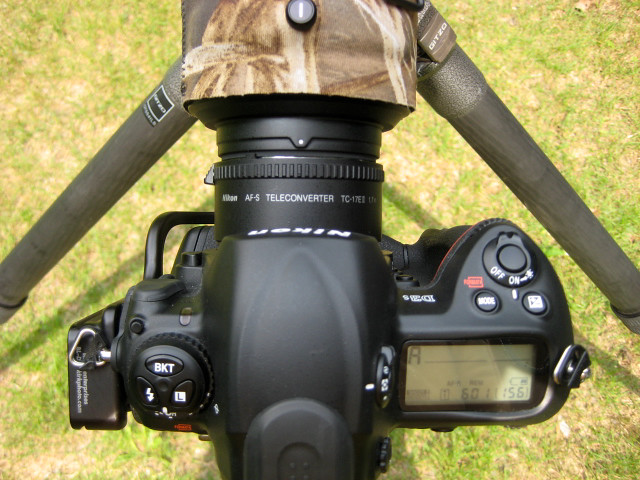
Nikon TC-20e III Teleconverter

Enough of the rambling, here are the photos :
Nikon 600mm f/4G VR II bare lens - full field of view

Nikon 600mm f/4G VR II - Crop

Sigma 1.4x TC - 840mm - full field of view


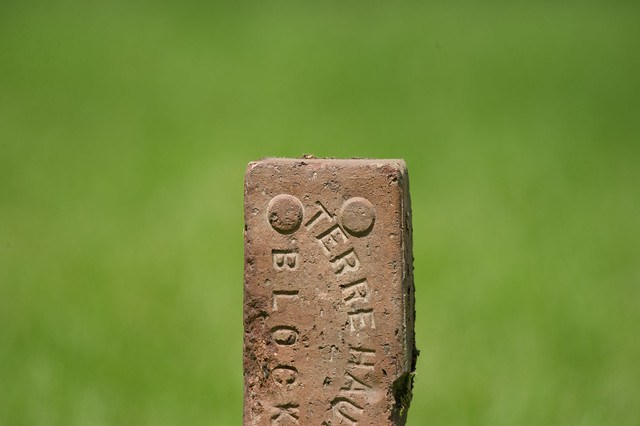
Nikon TC-20e III - 1200mm - full field of view

Nikon TC-20e III - 1200mm - Crop
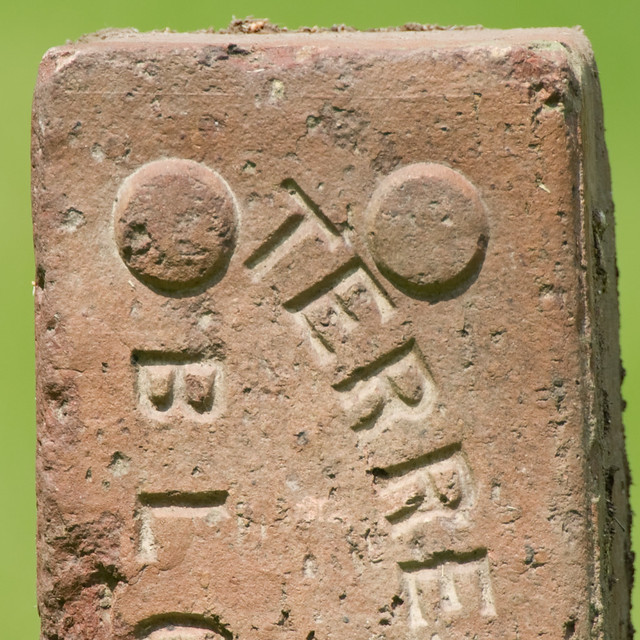
Now, I think they are all pretty sharp. Focus point for each photo was between the 2 raised dots, on the "T". There was absolutely no processing of these images other than importing into light room, cropping the selected crop photos shown, and exporting out .jpg's to post here. I did not adjust any sharpening, contrast, color, etc... That being said, I feel that the Sigma 1.4x TC had the best contrast in the image, with the 1.7x coming in a close second. The 600mm VR II bare at f/4 was the best in my opinion (as it should be!).
I almost did not use and was ready to discount the 1.4x as it seemed cheap to me, but it actually proved me wrong and produced stellar results. The 1.7x I have had for some time and really liked it, but wanted more reach. The TC-20e III is really why I decided to try and post this test. I had the previous TC-20e II and man, did it suck. The images were soft and AF was almost non-existent. The new 2x III version is absolutely amazing in my opinion. It is smaller in size and better in optical IQ. Pared with the 600mm VR II lens, it produced great bokeh, great contrast and most importanly, a sharp picture wide open at f/8. I can not be happier with the results and I look forward to posting the results when I return. In the meantime, more equipment testing and comparisons for my trip to come.
Thursday, June 9, 2011
Rethinking RRS TVC-34L Tripod Choice for upcoming trip to Alaska
Well, after giving it a lot of thought, I am rethinking my tripod choice for an upcoming trip to Alaska. I currently have the Gitzo GT5541LS which is a beast of a tripod - strong and stable. The big issue is the weight. I am 6'-1" and it is plenty tall for me along with my wimberley head. I originally wanted, and am currently on the waitlist for, a RRS TVC-34L as it goes plenty high, packs small and weighs almost 2lbs less than my Gitzo. Now the reason I am rethinking is solely based on packing. I do not have a lot of room for things and a huge tripod is a big concern. Katmai is the main place for the trip and I feel I might be on my knees most of the time while photographing, which would negate the need for a tall tripod.
After reading many blogs and forums and asking a few questions from a fellow photographer Michael Fullana, Creative Edge Photography, about what he brought to Alaska when he went this past September, it made me re-prioritize my needs. He told me he just brought a Gitzo 3 section 3 series tripod. After seeing the Amazing Alaska Images he captured while in AK from the lesser tripod of the 5 series, I seriously am considering getting a 3 series again or trying the RRS TVC-24 or the TVC-24L. The TVC-24 collapses down to 18.7" and can hold 40lbs. More than enough for a D3s, wimberley and a 600mm VR, especially if all legs are not extended. The only downfall to the 24 is that it only extends to 49". The 24L goes to almost 67", holds 40lbs and packs down 1" smaller and is 1lb lighter than the TVC-34L. I might have to buy the TVC-24 and the TVC-34L to compare and see what will work best. I will add a follow up post as soon as I can on this.
After reading many blogs and forums and asking a few questions from a fellow photographer Michael Fullana, Creative Edge Photography, about what he brought to Alaska when he went this past September, it made me re-prioritize my needs. He told me he just brought a Gitzo 3 section 3 series tripod. After seeing the Amazing Alaska Images he captured while in AK from the lesser tripod of the 5 series, I seriously am considering getting a 3 series again or trying the RRS TVC-24 or the TVC-24L. The TVC-24 collapses down to 18.7" and can hold 40lbs. More than enough for a D3s, wimberley and a 600mm VR, especially if all legs are not extended. The only downfall to the 24 is that it only extends to 49". The 24L goes to almost 67", holds 40lbs and packs down 1" smaller and is 1lb lighter than the TVC-34L. I might have to buy the TVC-24 and the TVC-34L to compare and see what will work best. I will add a follow up post as soon as I can on this.
Wednesday, April 27, 2011
NIkon Lenses - Nikon 50mm f/1.8G AF-S
I will admit, I am definitely a Nikon fanboy. I love all things Nikon from the super telephotos down to the small primes. Speaking of small, Nikon just announced the new Nikon 50mm f/1.8G AF-S Lens last night. The D version of this lens is actually the first lens I ever owned. I bought a used nikon d50 off of craigslist and part of the deal was the 50mm f/1.8. I did not know much about it at the time but I learned to love it and make great pictures (well, ones that I enjoyed anyway). I learned about depth of field, minimum focal distance, aperture, etc.. I had never owned an slr camera before, let alone a digital slr. I have come a long way since, but I still have a TON to learn as I seem to be challenged everyday I am able to go shooting, whether it be still objects or moving. I have since sold the lens along with that camera to another person that was just starting out and seeing the new incarnation of this lens, I might just get it for kicks as it is super small and lightweight. I can just throw it in a bag and not worry about it.
I have had all sorts of f/1.4 lenses - 50mm f/1.4G, 85mm f/1.4G and I have learned that for at least what I like to do, the 50mm and less seems to be the best as the minimum focus distance (MFD) on the 85mm f/1.4G that I had just seemed to be too long for the way I wanted to use it. Can Nikon make an 85mm f/1.4 with a super short MFD similar to the 24-70mm or the 24mm f/1.4G? I am sure it can be done, but at what cost, I have no idea. I know that because of that, the 50mm f/1.4G seems to be the lens I go to for shallow depth of field when I need to be a little bit closer and f/2.8 of the 24-70mm just won't cut it. Can't wait to see how the new 50mm f/1.8G is when it comes out as I am anxious to give it a try again...
I have had all sorts of f/1.4 lenses - 50mm f/1.4G, 85mm f/1.4G and I have learned that for at least what I like to do, the 50mm and less seems to be the best as the minimum focus distance (MFD) on the 85mm f/1.4G that I had just seemed to be too long for the way I wanted to use it. Can Nikon make an 85mm f/1.4 with a super short MFD similar to the 24-70mm or the 24mm f/1.4G? I am sure it can be done, but at what cost, I have no idea. I know that because of that, the 50mm f/1.4G seems to be the lens I go to for shallow depth of field when I need to be a little bit closer and f/2.8 of the 24-70mm just won't cut it. Can't wait to see how the new 50mm f/1.8G is when it comes out as I am anxious to give it a try again...
Subscribe to:
Posts (Atom)